Synopsis
status quo
I built my physique and others wanted to know how. My systems needed to be consolidated in a way they would understand. Using my product design skills, I began searching for a new way to relay my abilities scalably.
challenge
discover
I analyzed the fitness tech (fit-tech) industry. I assessed the opportunity in terms of industry growth and gaps in the market. Here's what I found.
key stats
industry size
growth rate
The industry is projected to reach $23.2 billion by 2030.
primary region
In 2024, the Canadian fitness app market generated $612 million (5% of global revenue) and is projected to grow to $1.59 billion by 2030. Canadian fit-tech is growing faster than America (US: 11.4%, CAD: 16.9%, 2025–2030). This makes Canada the place to focus on.
Competitors
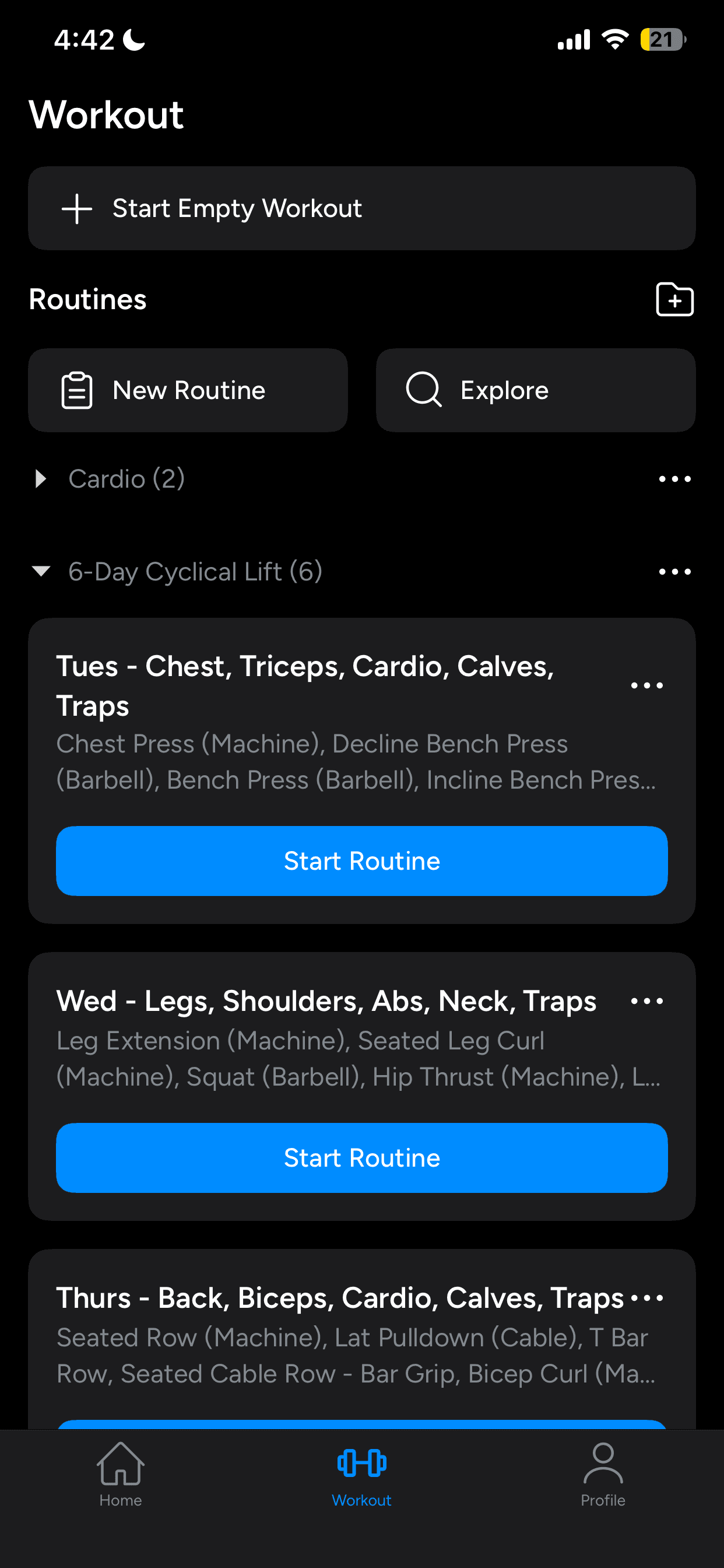
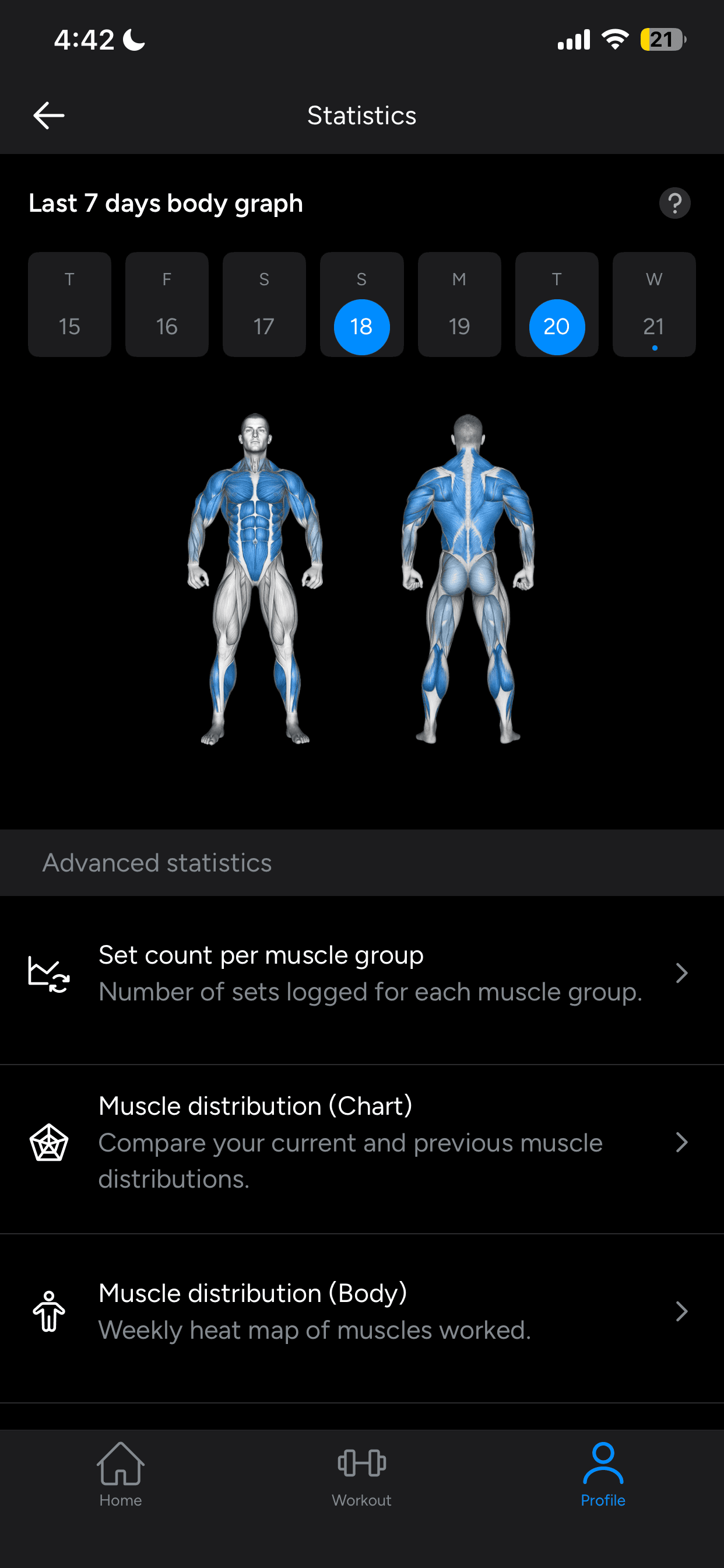
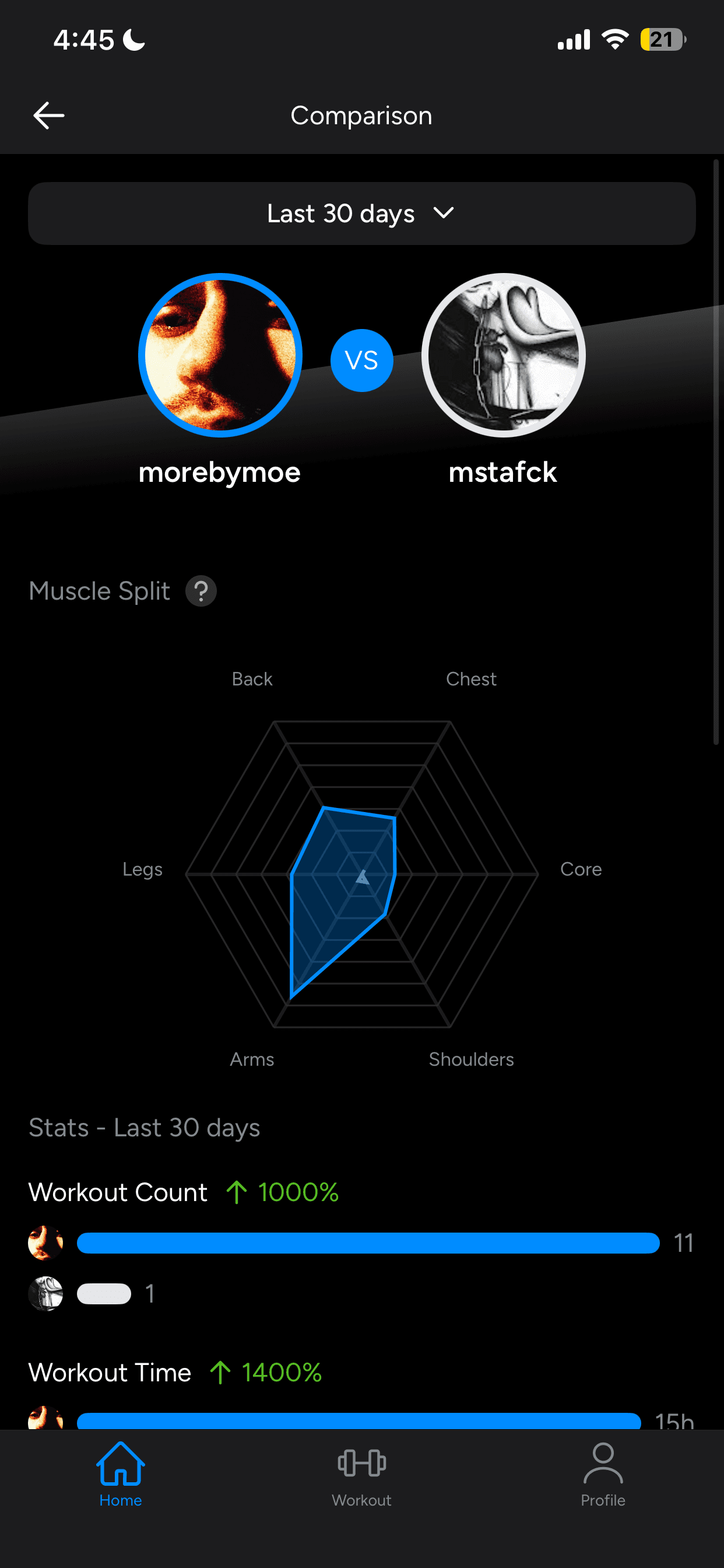
This workout tracker that is popular for its social functions including analyzing people's workouts, progress-sharing and leaderboards. It includes a ChatGPT wrapper for generating workouts. It can display previous activity via graphs and charts as well as a body map of what body parts have been exercised weekly.
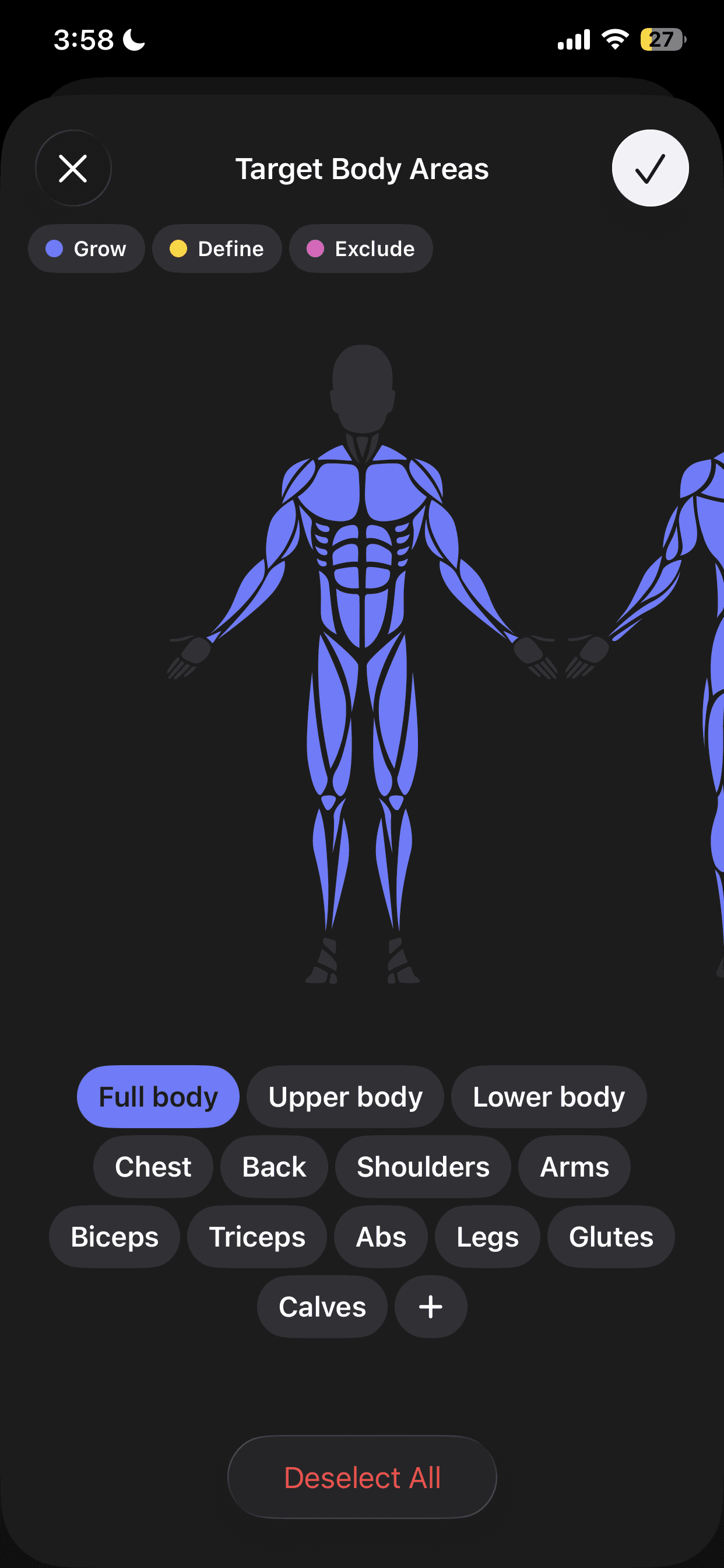
This workout tracker is popular for its use of detailed body-mapping; it tells its users what body parts have been worked out when exercising. It also has a generative workout planner and a goal-setter but its not thorough.
Setgraph clearly outlines targeted body parts when generating workouts, but its goal-setting lacks depth and relies on crude metrics like body weight, which don’t reflect lean mass. Logging reps and weights feels overwhelming due to excessive options, colors, icons, and information density. Tight click areas further hurt usability and make interactions frustrating.
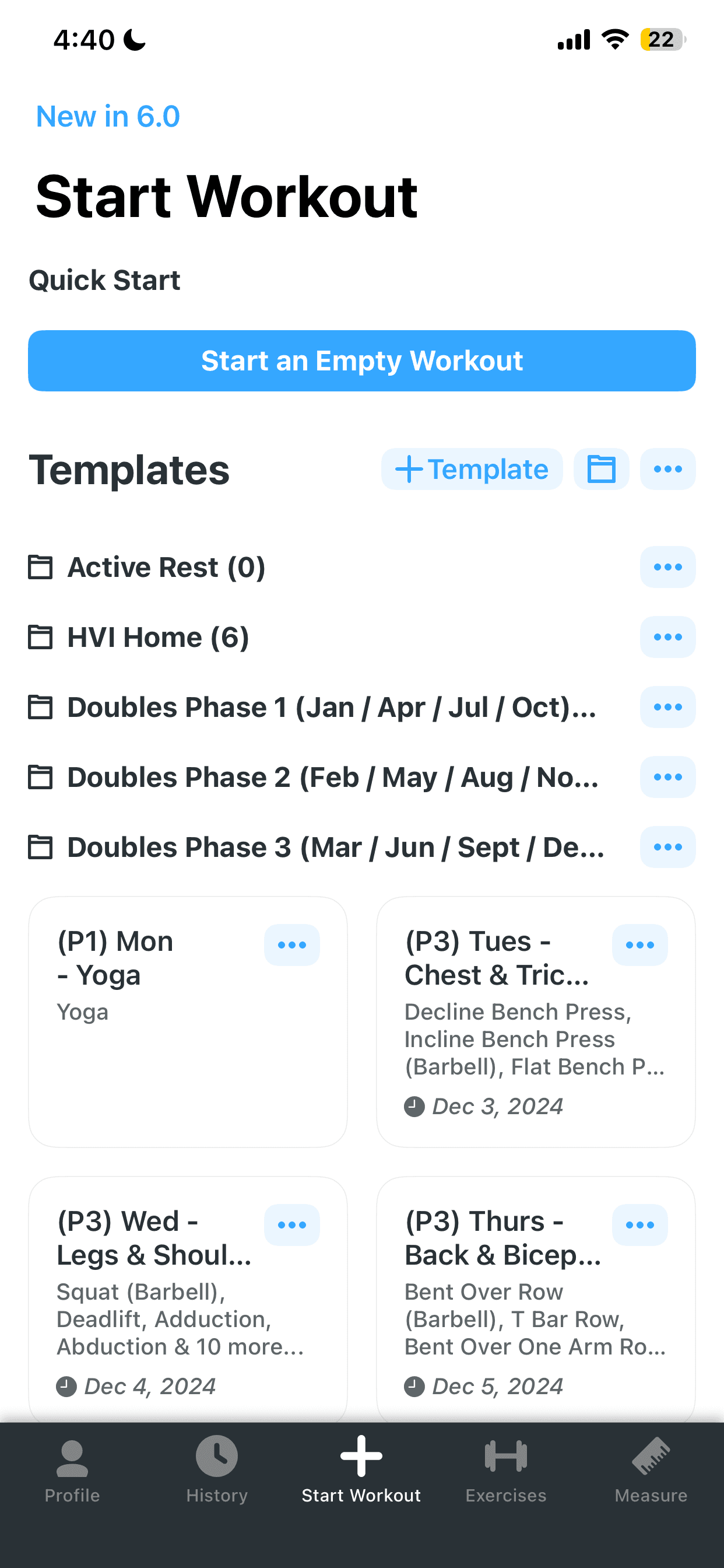
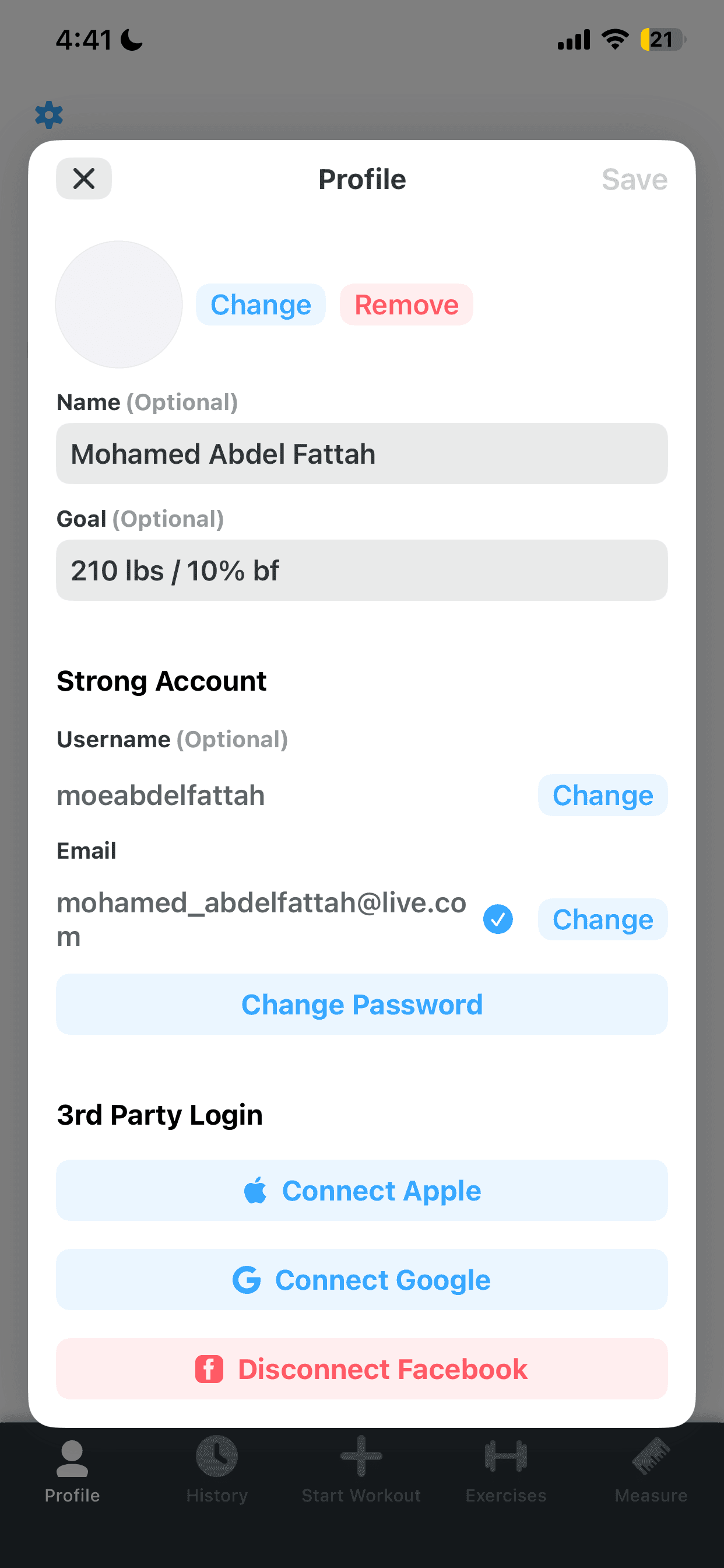
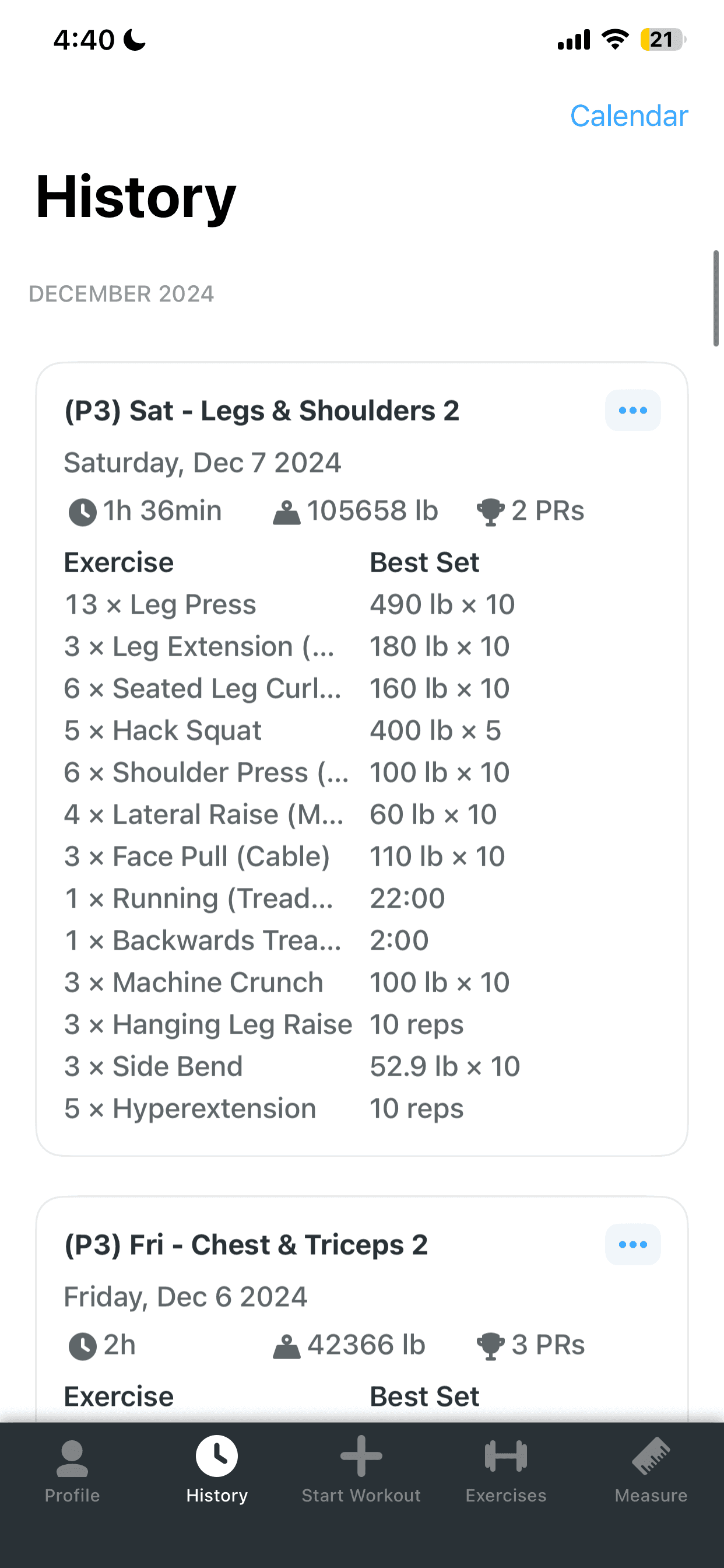
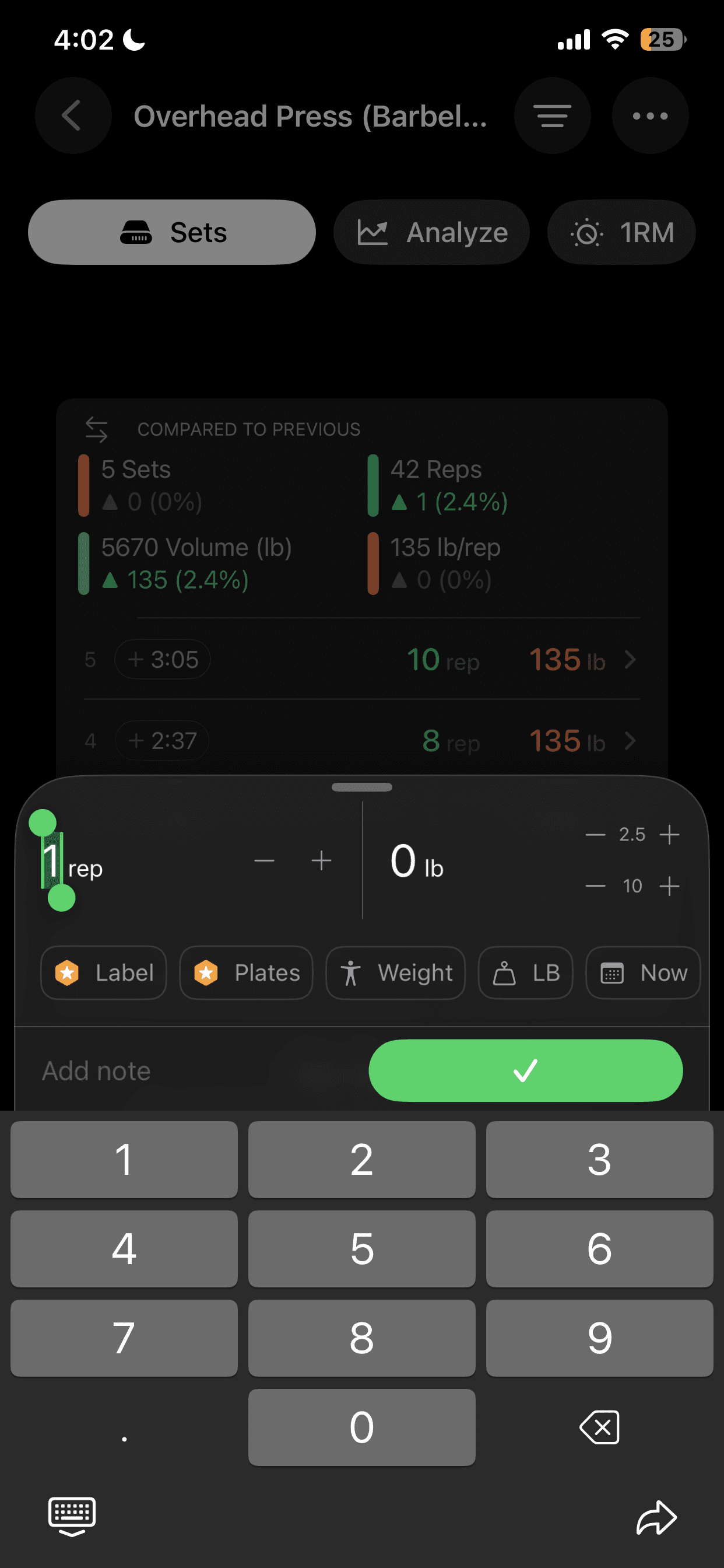
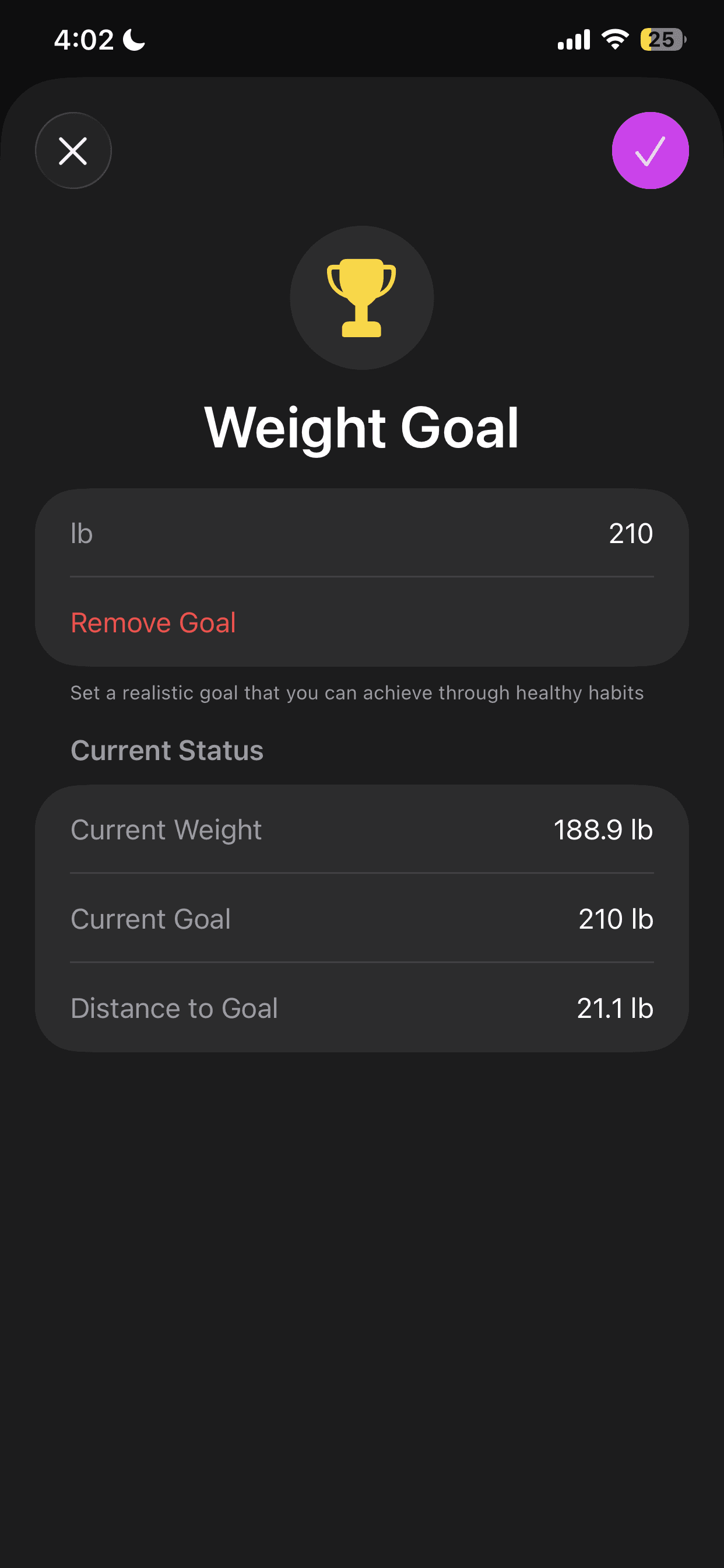
This is another workout tracker popular for its charting capabilities. It does not have any social media, AI tools or other advanced options.
Strong has a clean, straightforward design and its freemium version lets users manually create a fixed set of workouts. However, goal-setting is limited to text and isn’t connected to actual workouts or exercises. While Strong tracks solid historical data, it doesn't connect how previous workouts led to a user’s goals.
culture
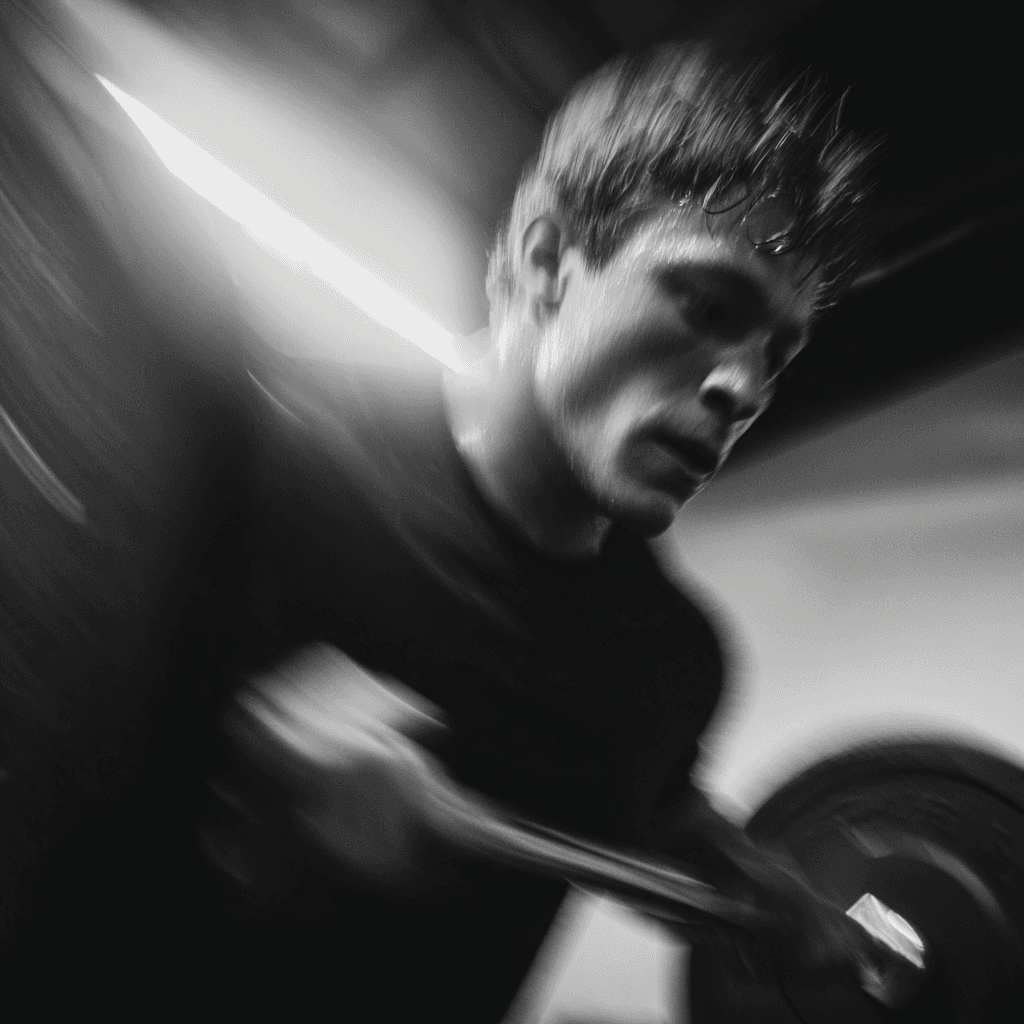
Many fitness brands evoke a sense of activity and drive through the use of determined stares, fast-cut videos and dark colours. They may even do this with bright, vivid colours as seen with Nike or Adidas. Energy is a mindset.
problems
Many lifters cannot identify if they might have muscular imbalances. They resign to the idea that their body is designed inefficiently, blaming genetics or lack of discipline. This mindset creates instability.
Today's fitness world pushes the need for the latest gym equipment, supplements, protein shakes on top an an already pricey gym membership. Some gym-goers do not have the means to afford regular coaching on and resort to self-recording or coaching from untrained people to analyze their form. This is risky when performing exercises, like squats or bench press, that have many nuances and can lead to short or long-term injury.
Lifters do not know how today's exercise or meal contribute to tomorrow's physique? They do not have a roadmap of how to get to their goals, if set at all. This leads to years of plateaus and abandoning one's fitness regime.
insight
define
ethos
There are many fitness apps and brands that orient themselves as the one to activate an beast-like athlete within their consumer. PATI will take a different approach as "the scientist" providing a digital lab where users can experiment as aggressively or modestly as they like with workout routines, meal plans and exercises that will drive precise information about their fitness journey.
demographic
Nattie refers to gym-lingo for an athlete, typically a weight-lifter or body builder, who is "natural" and does not resort to performance-enhancing drugs like steroids or supplemented testosterone. They prefer a sustainable method of making progress and are likely to approach their fitness systematically through weekly meal preparations and a refined workout plan. These athletes have been at it for a while and are looking for a natural edge to improve their performance.
These athletes are driven to win. They want to make progress and quickly—they are new to the lifting game and are looking for guidance at any which way. Novice lifters are likely to embrace technology on their fitness journey and want to bring their friends along for the ride. They might rush their workouts.
psychographics
Personal growth
Determined, focused, serious, authentic
Scheduled workouts, workouts are planned
Looking for insights for break plateaus
Understands how to current activities lead to future gains
Memes
Idealistic, binary-thinking, humorous
Scheduled workouts, workouts are planned
Realizes they are in need of guidance on their journey
Has attained success but is hitting plateaus
Positioning
Other fitness trackers are great at providing information based on previously executed workouts. The future of tech will accelerate precision, which will lead to highly personalized workout and meal plans. Tech like AI already study users and can provide detailed workouts or meals. There is an opportunity to create a fitness tracker that acts as real-time personal trainer that consolidates this ability and learns even deeper about the user. We can identify fitness enhances by analyzing past performance.
attributes
Committed to your betterment
Your AI personal trainer
Dependable, sturdy, accurate
Precision, foresight, future-proofing
objectives
design
The design phase of this project was broken up into three main areas; brand identity, design system and prototypes. This led to an minimum viable product (MVP), that I engineered using Cursor, to prep for an app store launch.
Key Features
While designing, I made a list of features I wanted to create. I distilled the list to a core few that I would prioritize for an MVP and others I would save for later production based on time and resources. On top of the staple features like creating and tracking workouts, I identified two key features that I haven't substantially found in other apps. I started with visual mock-ups that I prototyped in Figma that would act as the basis of my user tests. With user validation, I would carry the validated ideas to Cursor to engineer an MVP.
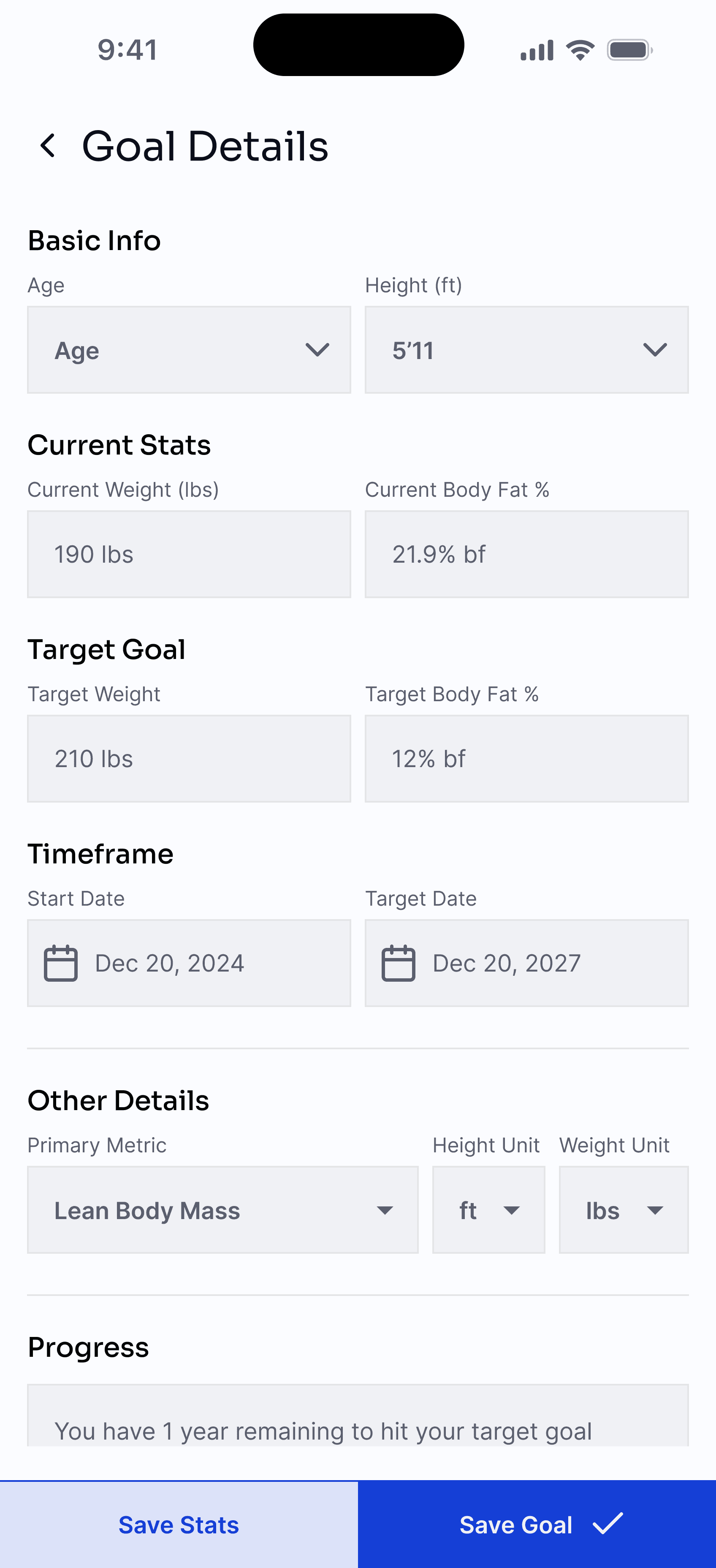
Many fitness trackers allow you to track your body weight or other measurements but, they do not connect how your workouts lead to the user's goals. The aim of the goal-setter is help users articulate what exactly they're aiming for. Intelligent suggestions like when to push hard, when to rest and what to eat are some of the things that can be provided given proper goal-setting.
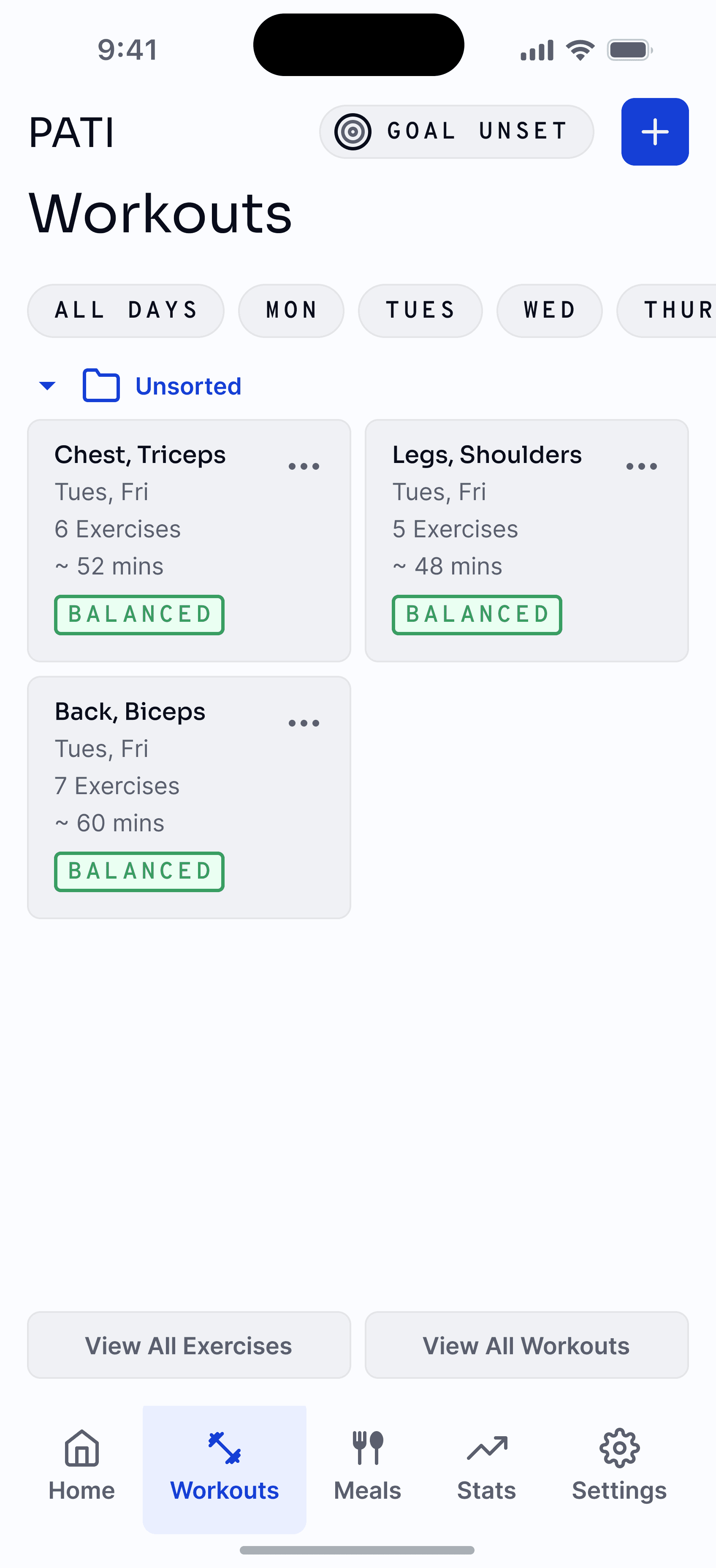
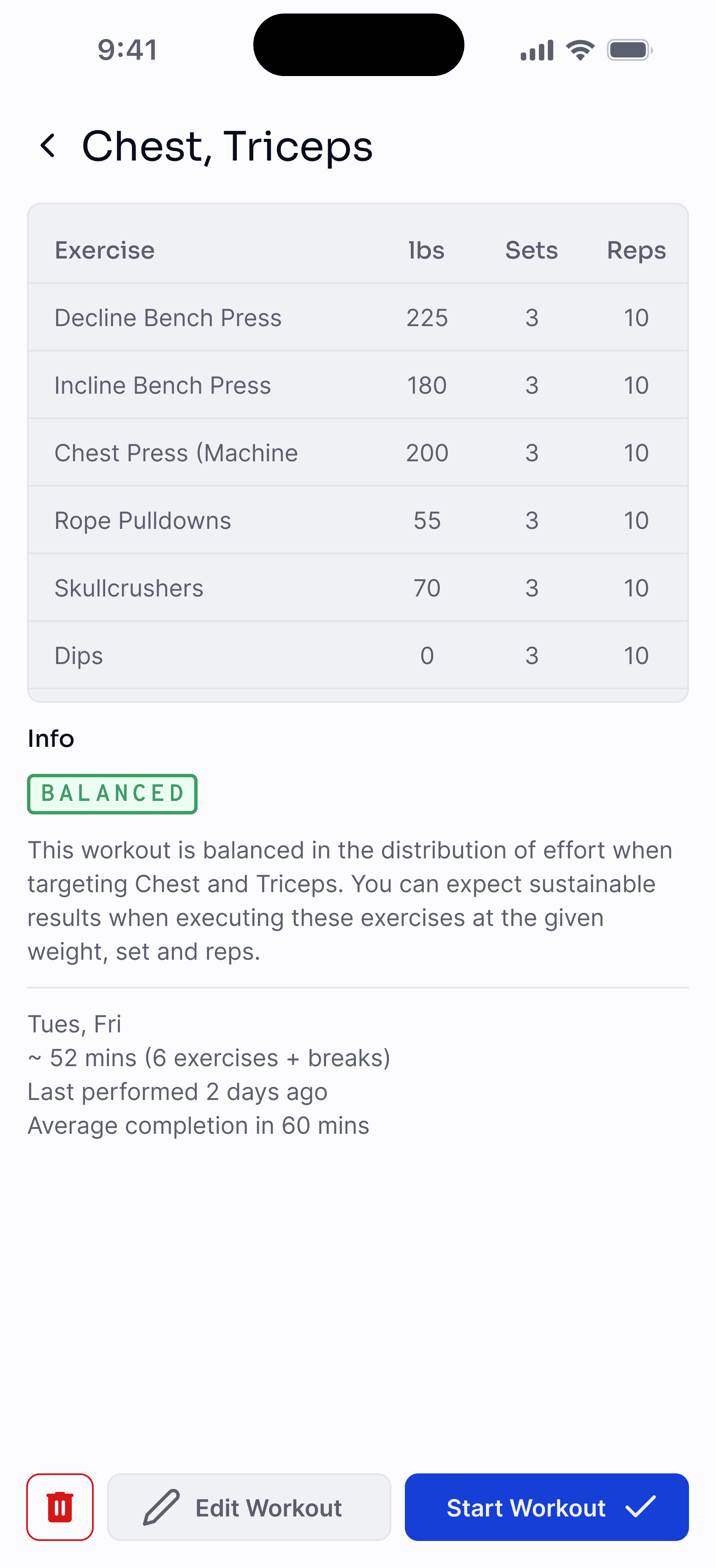
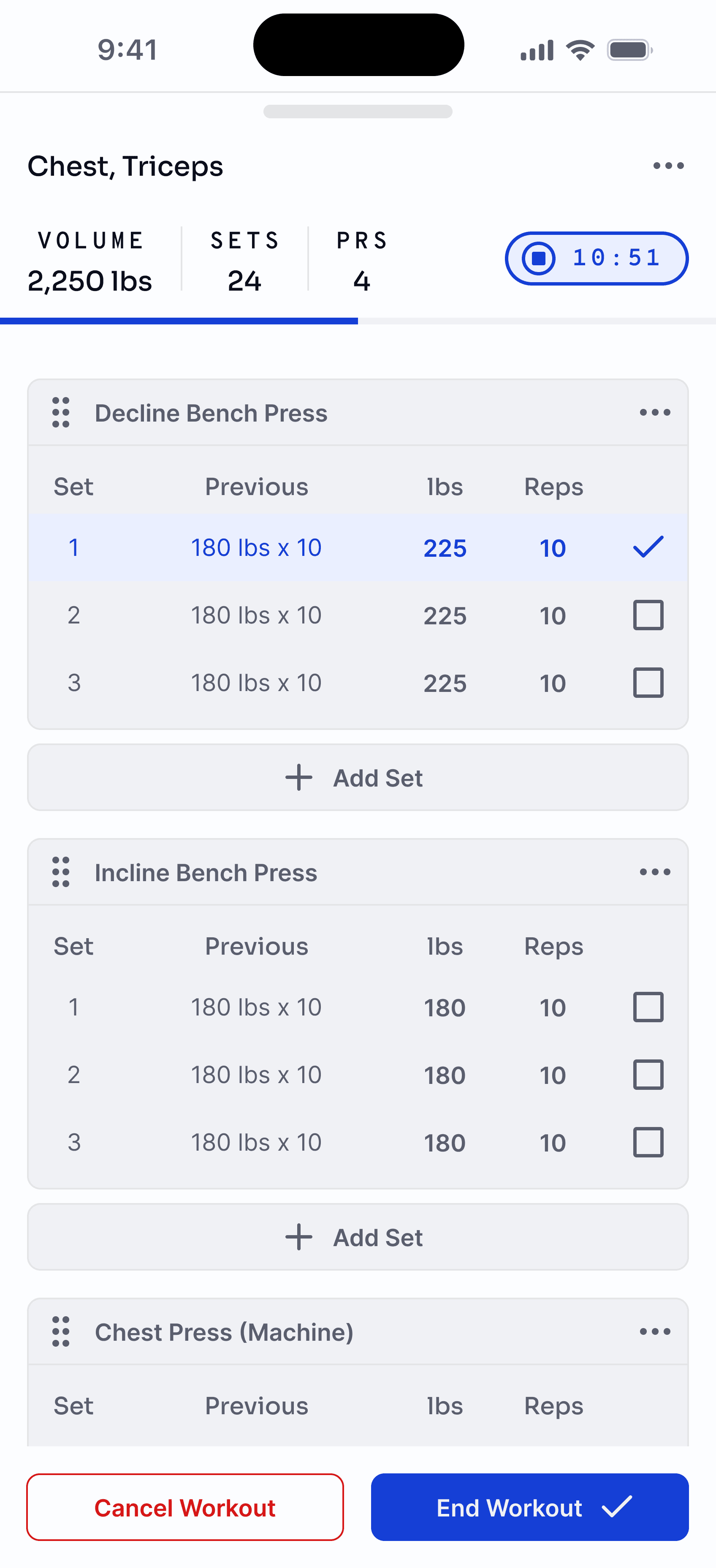
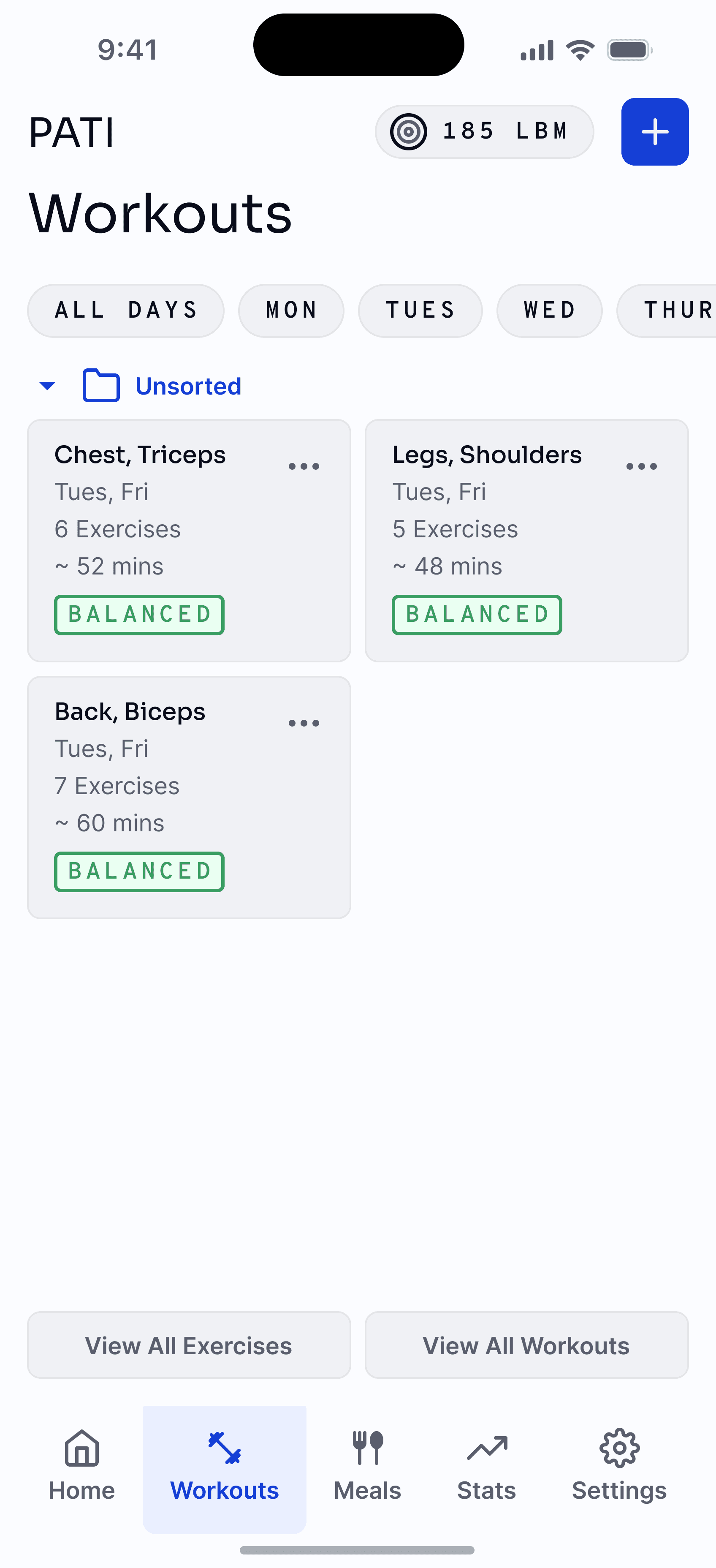
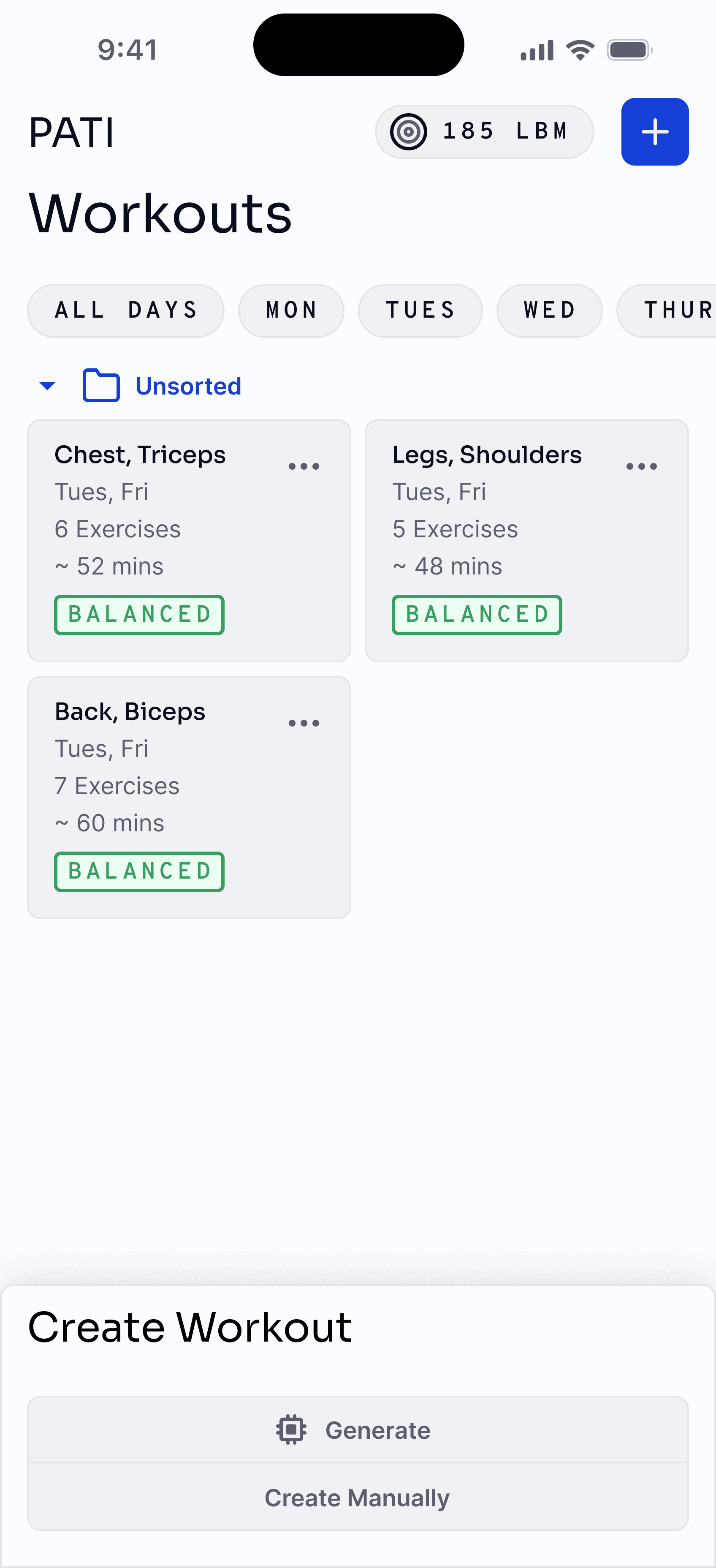
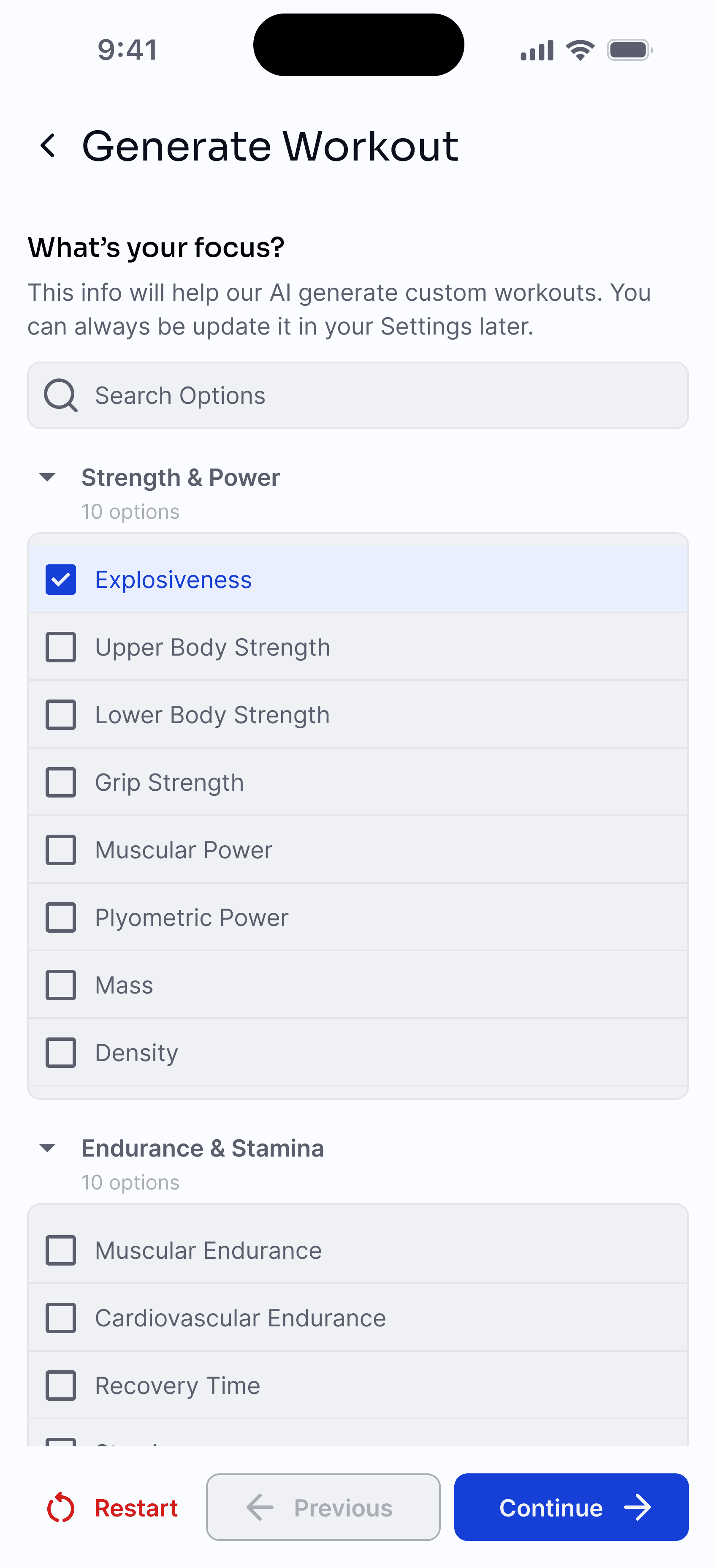
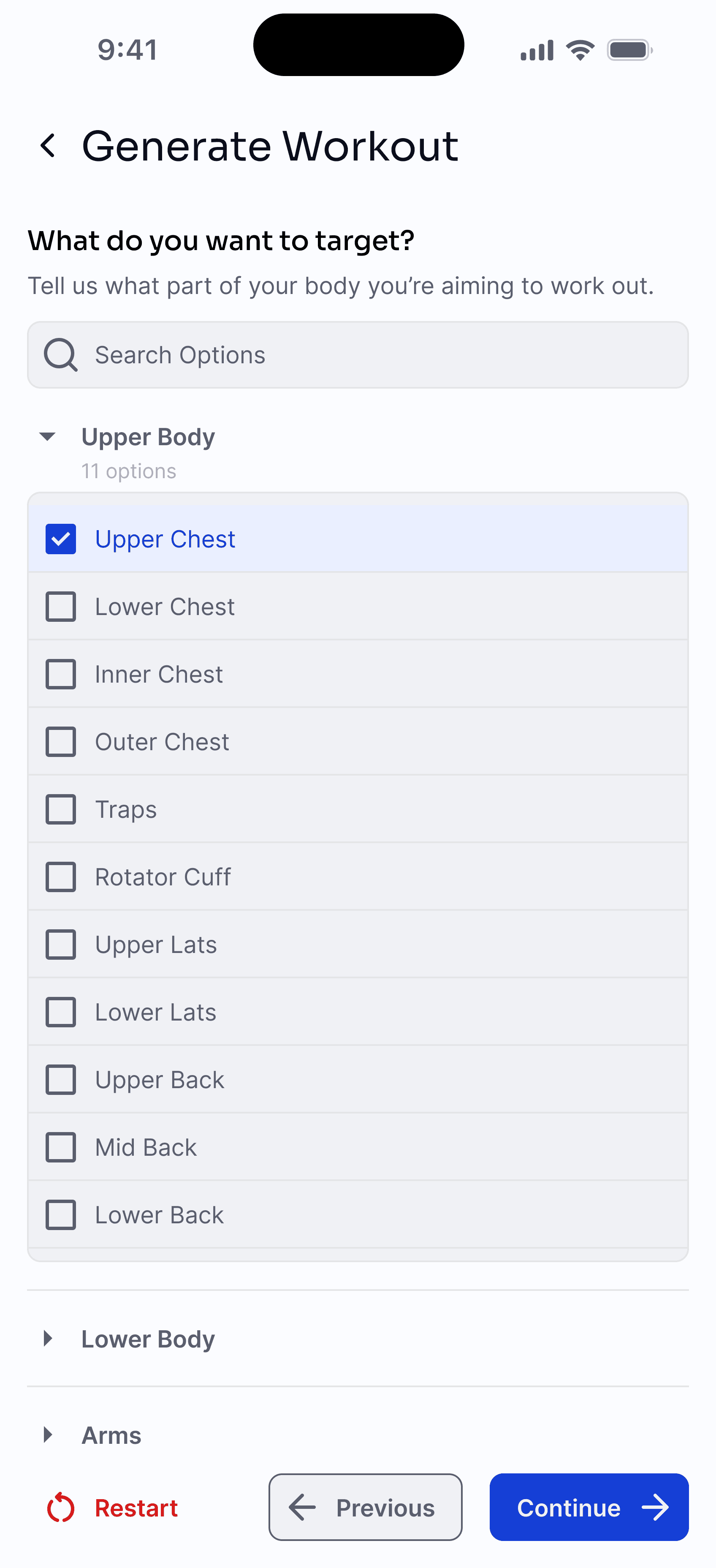
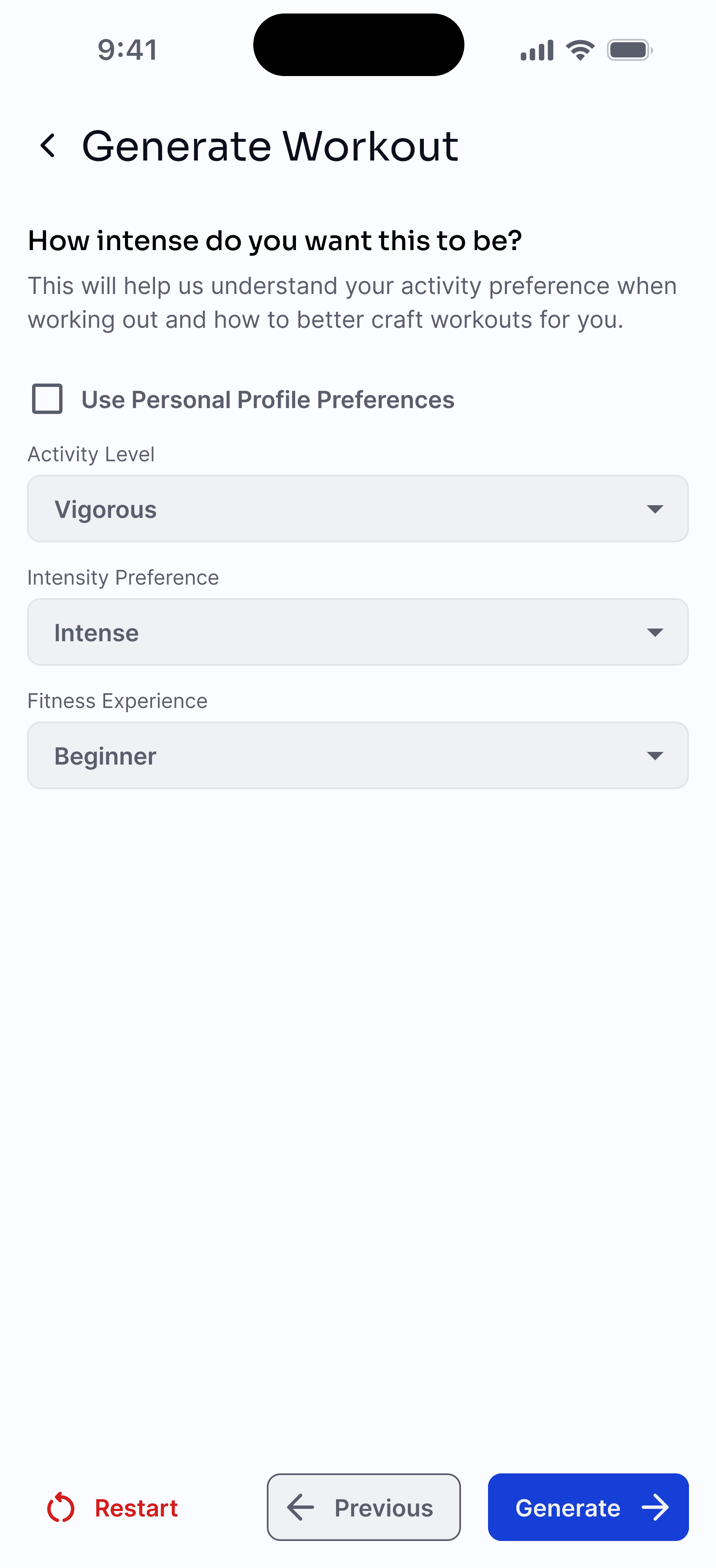
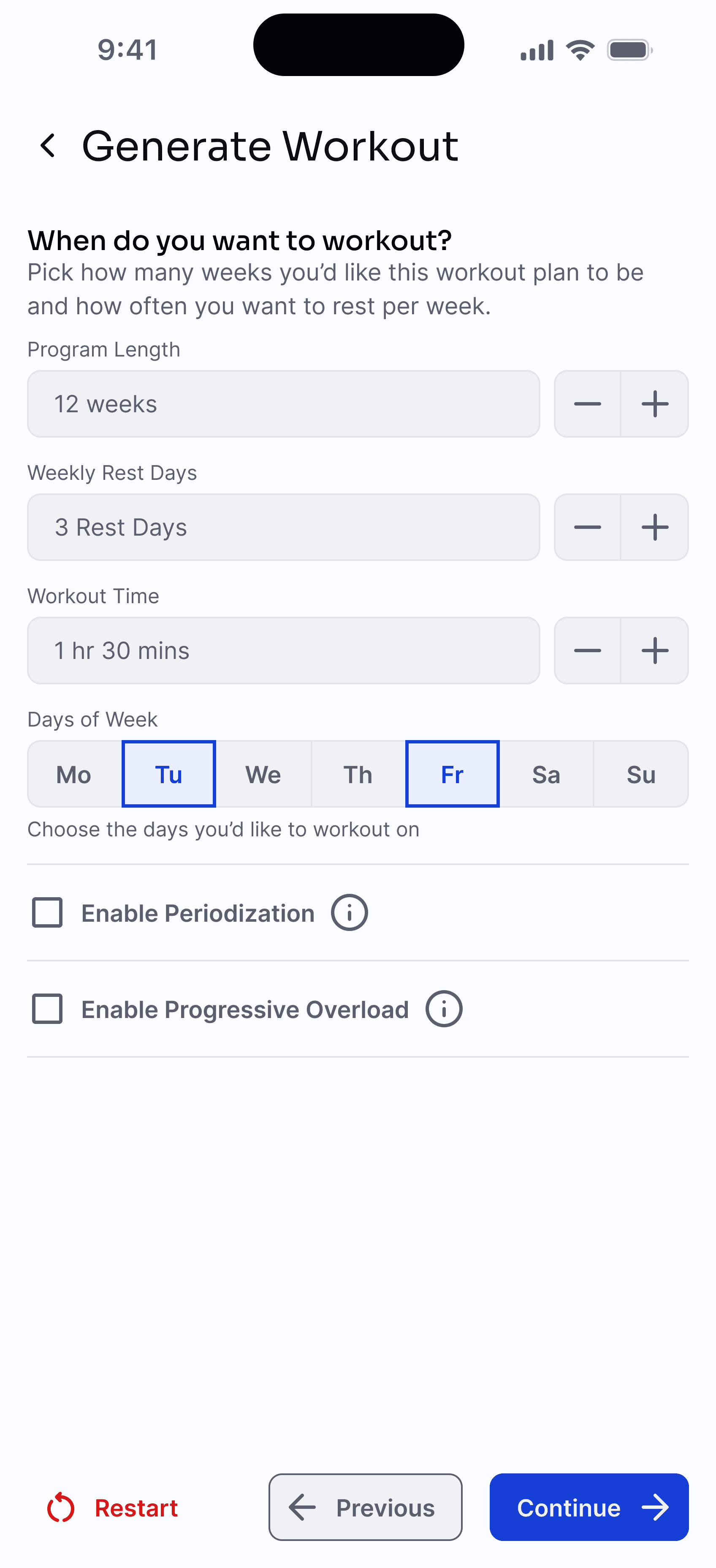
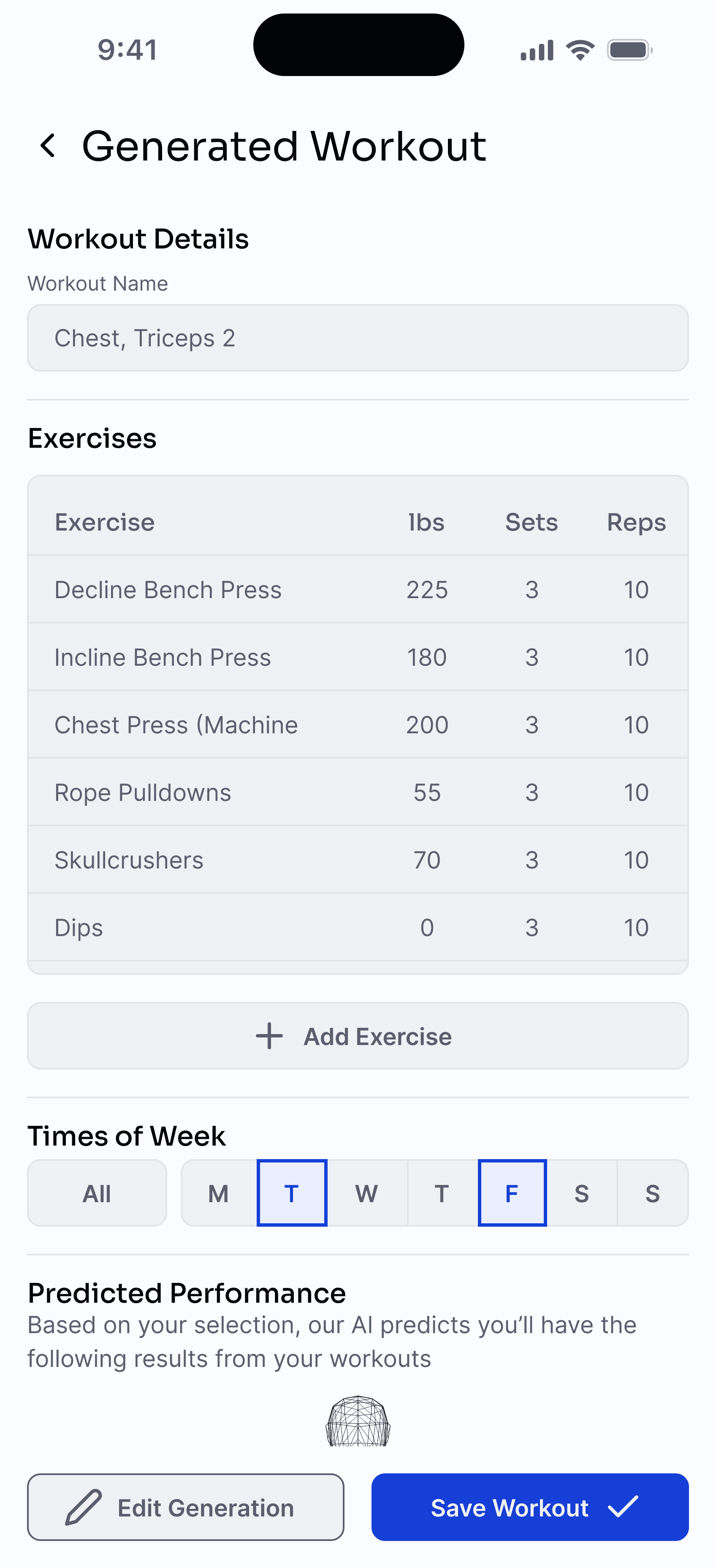
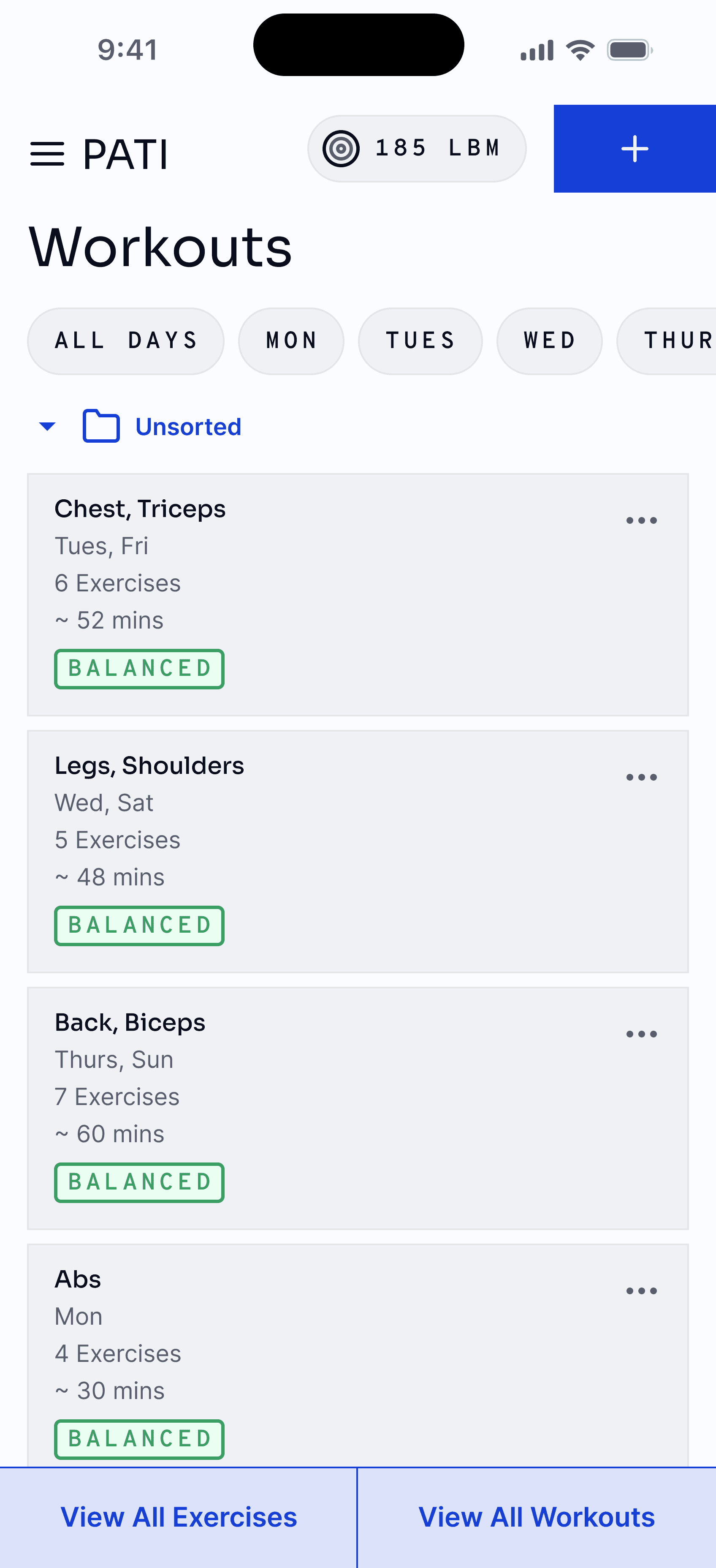
PATI aims to be a central hub for all fitness activities. This includes planning workouts. Some users might not know where to start. To usher them into a safe and effective workout routine, we can configure various exercises together and use calculations like optimal volume to lift, strength standards and the like to create workouts that suit the user's preferences.
brand identity
I created a barebones brand identity to capture the essence of my idea and guide other efforts like product colours. I named the app “PATI” to sound like a human name similar to Apple’s Siri or Amazon’s Alexa. The name is constructed using the initials of the app’s purpose—to provide personal training through artificial intelligence. The initials were rearranged to read like “Patty.”

PATI
design system
I expanded my concept with a simple design system. I built components on a case-by-case basis as I designed for various user flow. This includes a colour system, typography, page layouts, buttons and interactions.
product colours
pati
colour / main /
/ focus
/ emphasis-high
/ emphasis-mid
/ emphasis-low
/ border
/ surface
/ background
/ background-modal
/ state-pressed
/ state-selected
colour / alert /
/ focus
/ emphasis-high
/ emphasis-mid
/ emphasis-low
/ border
/ surface
/ background
/ background-modal
/ state-pressed
/ state-selected
typescale
pati
Sora
Regular
64 px
Used as a page or section indicator; also for promotions
Head 2
52 px
Head 3
48 px
Head 4
32 px
Head 5
24 px
Head 6
20 px
Subtitle 1
Medium
16 px
Used as a label or precursor to body-1, in-line text interactions or for promotional purposes
Subtitle 2
14 px
Used as a label or precursor to body-2 or in-line text interactions
Body 1
Inter
Regular
16 px
Used for promotional large bodies of text
Body 2
14 px
Used for general large bodies of text
OVERLINE
Overpass Mono
Medium
12 px
0.25 em kerning
Used for subtext before large bodies of text
CHIP-TAG
Semi-bold
14 px
0.25 em letter-space
Used for interactive text with chip or tag components only
Button
Inter
Semi-bold
14 px
Used for interactive text within components or independently
Caption
Regular
12 px
Used for subtext after large bodies of text
Prototype
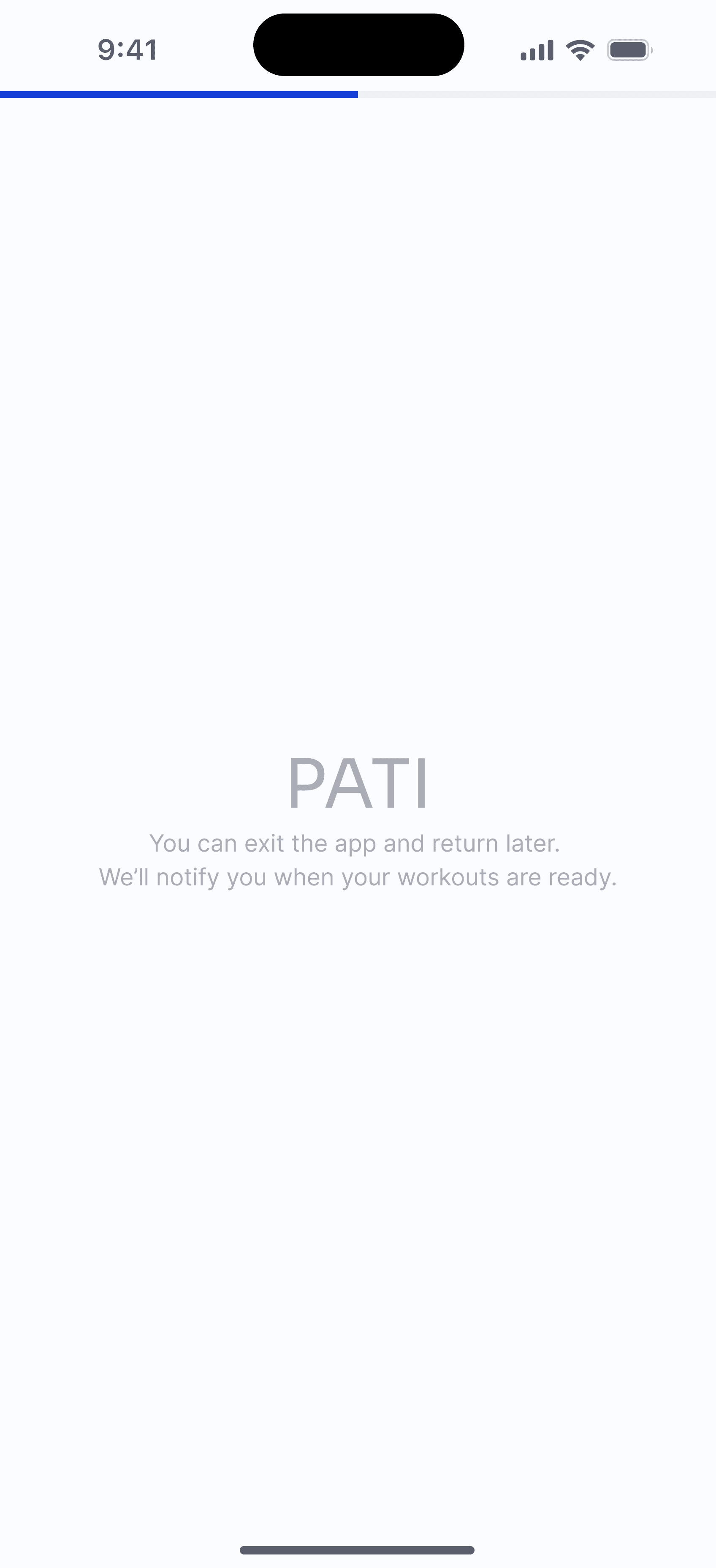
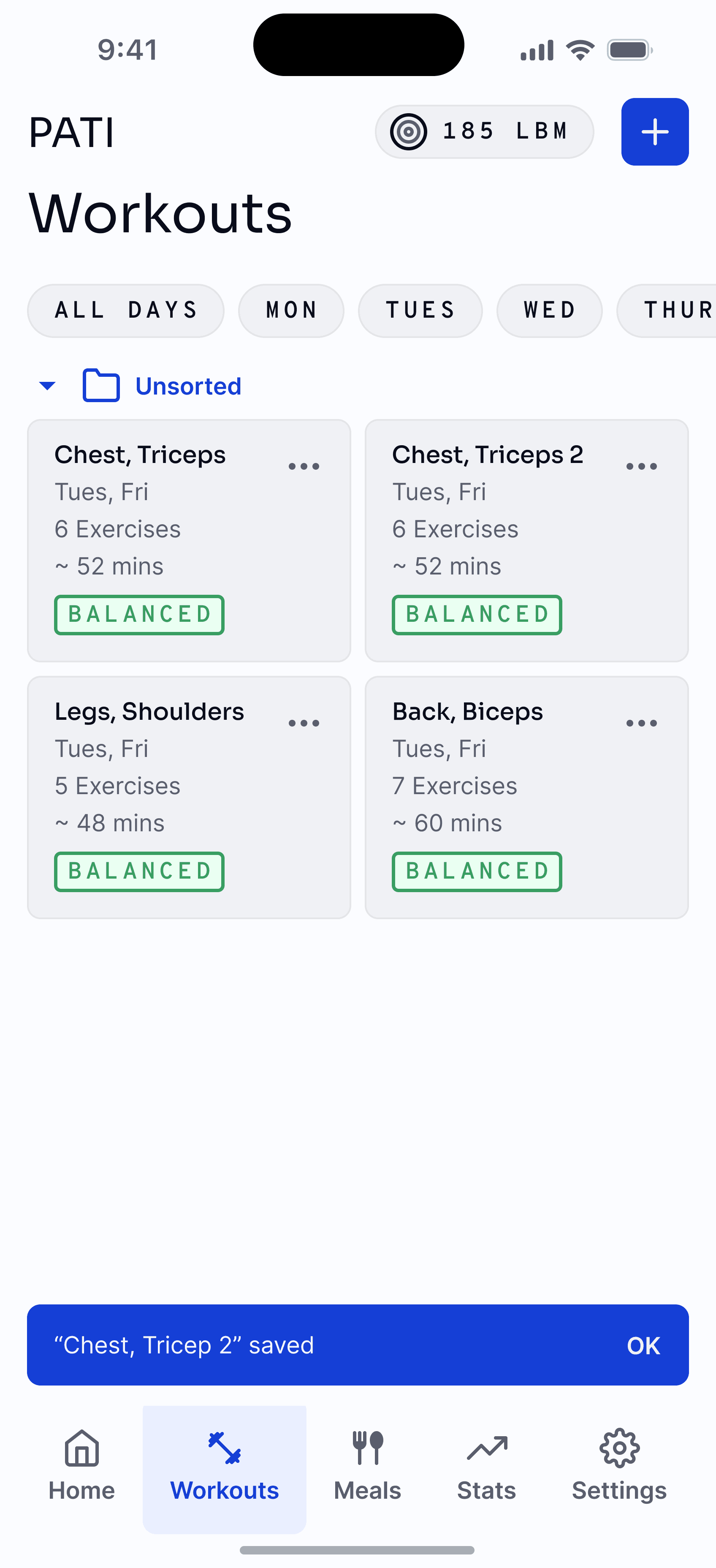
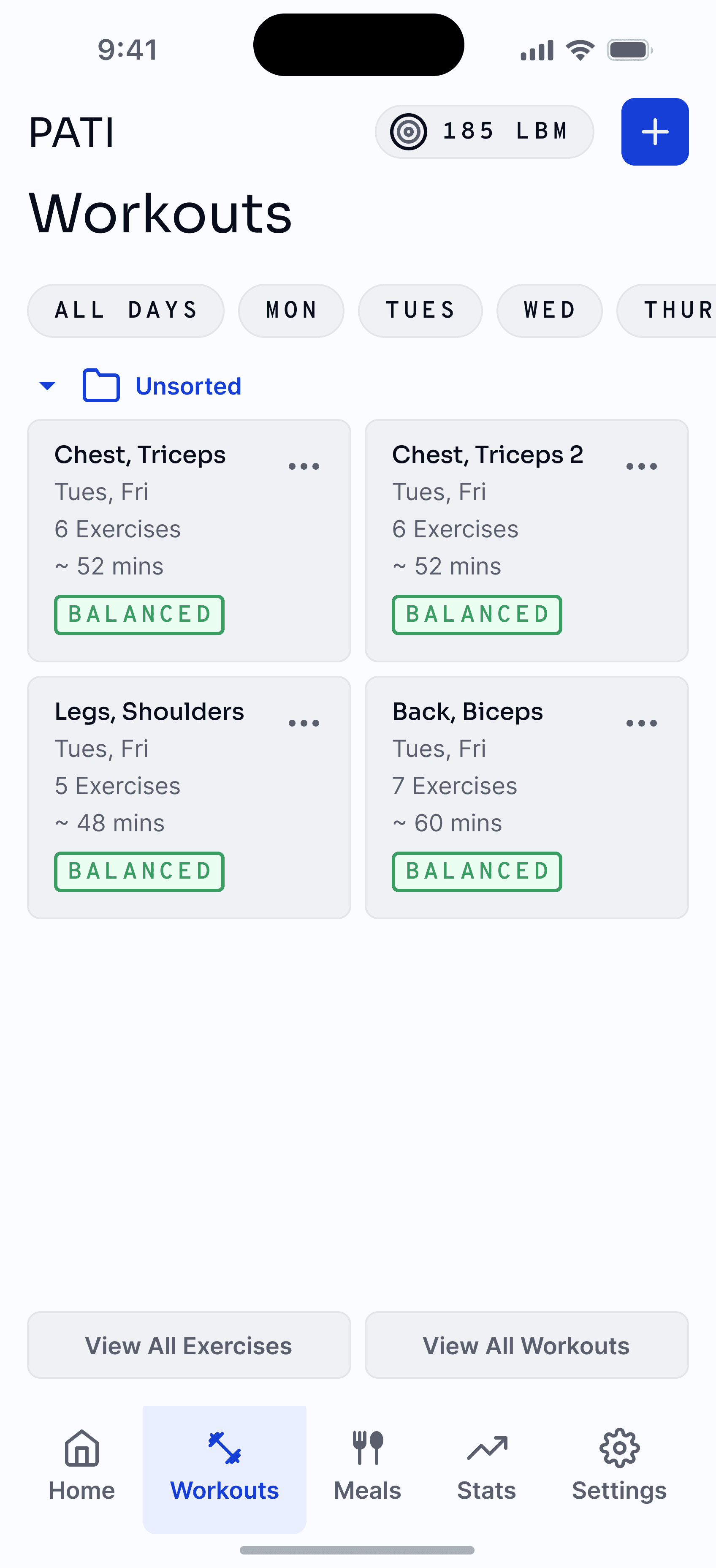
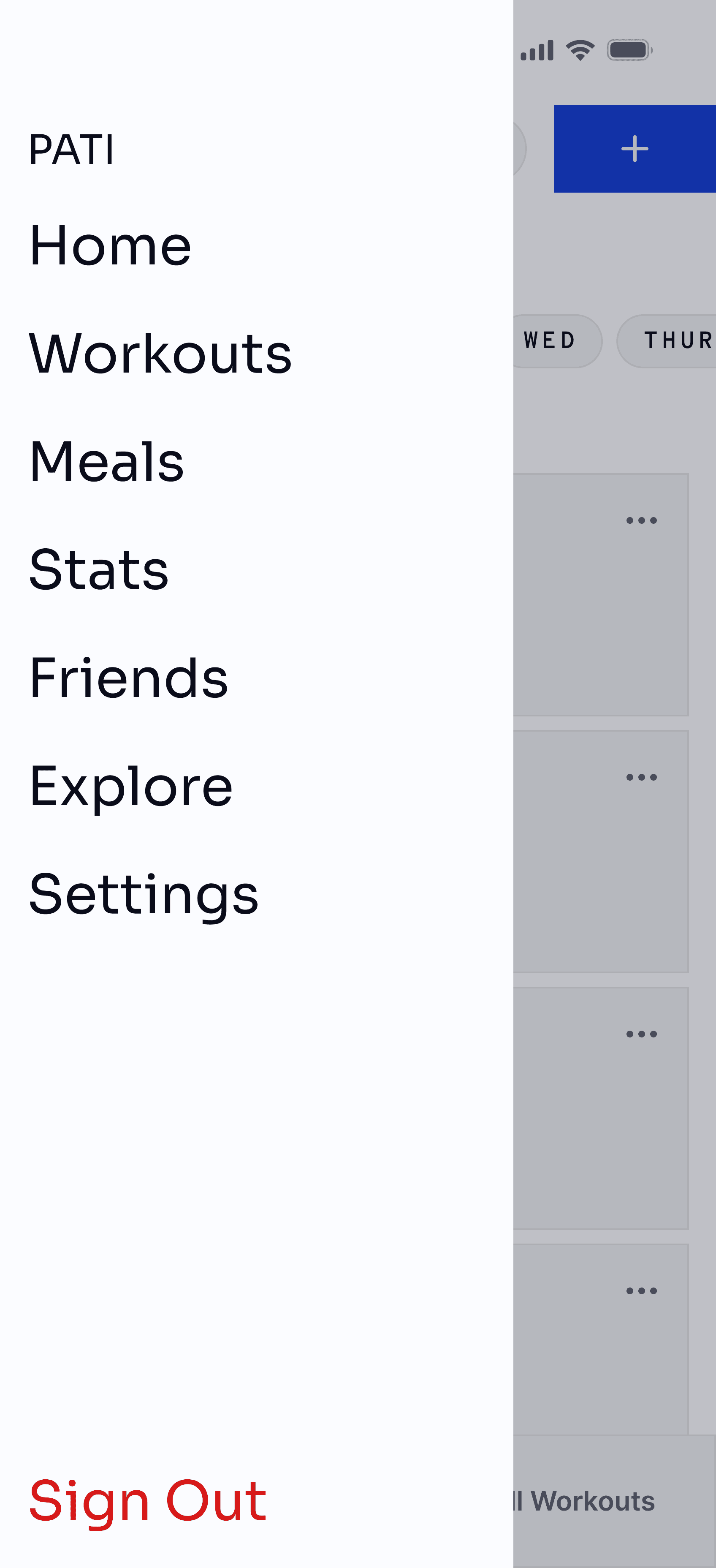
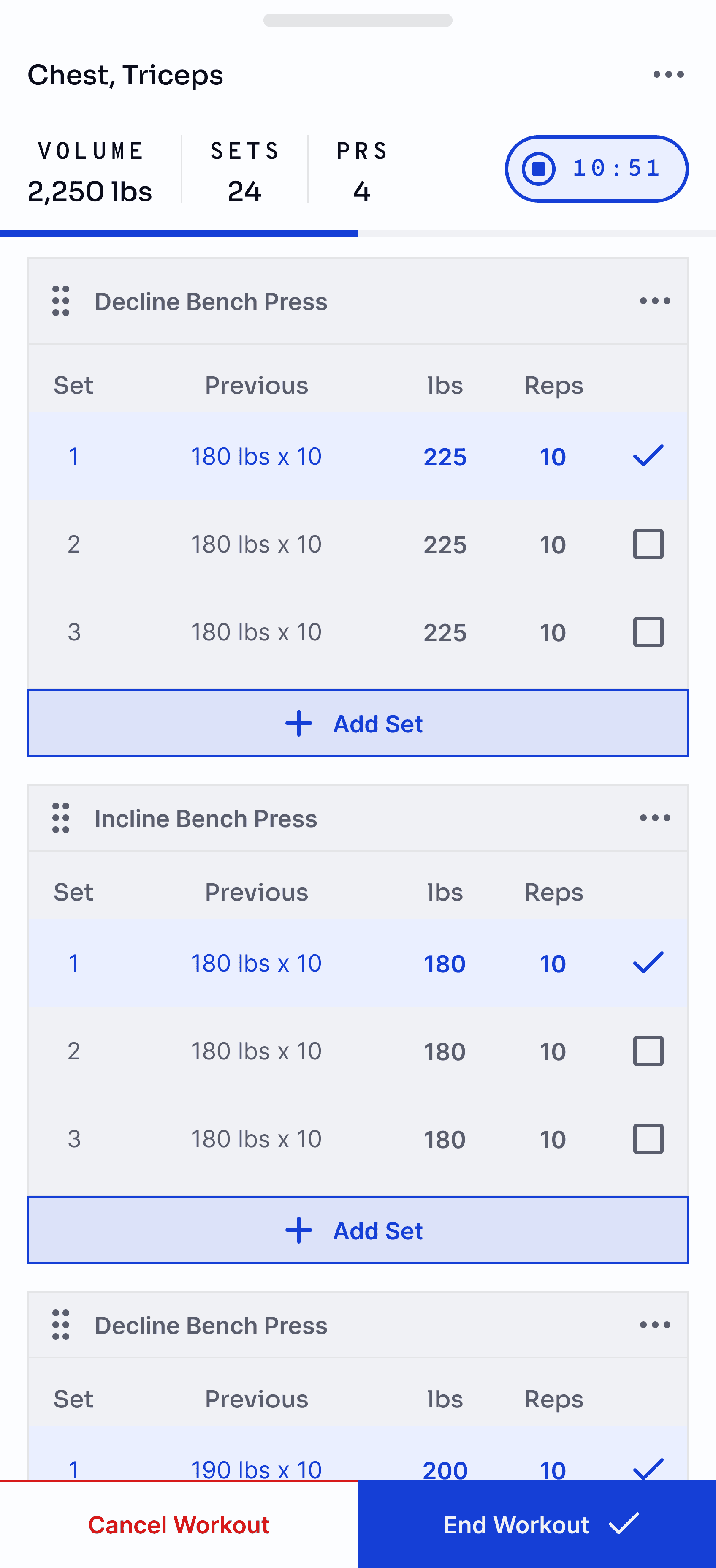
I drafted the entire user flow from sign-up to editing a workout plan in Figma. I used Cursor to develop the key features. Below are screens for the key features.
user flow
goal-setting
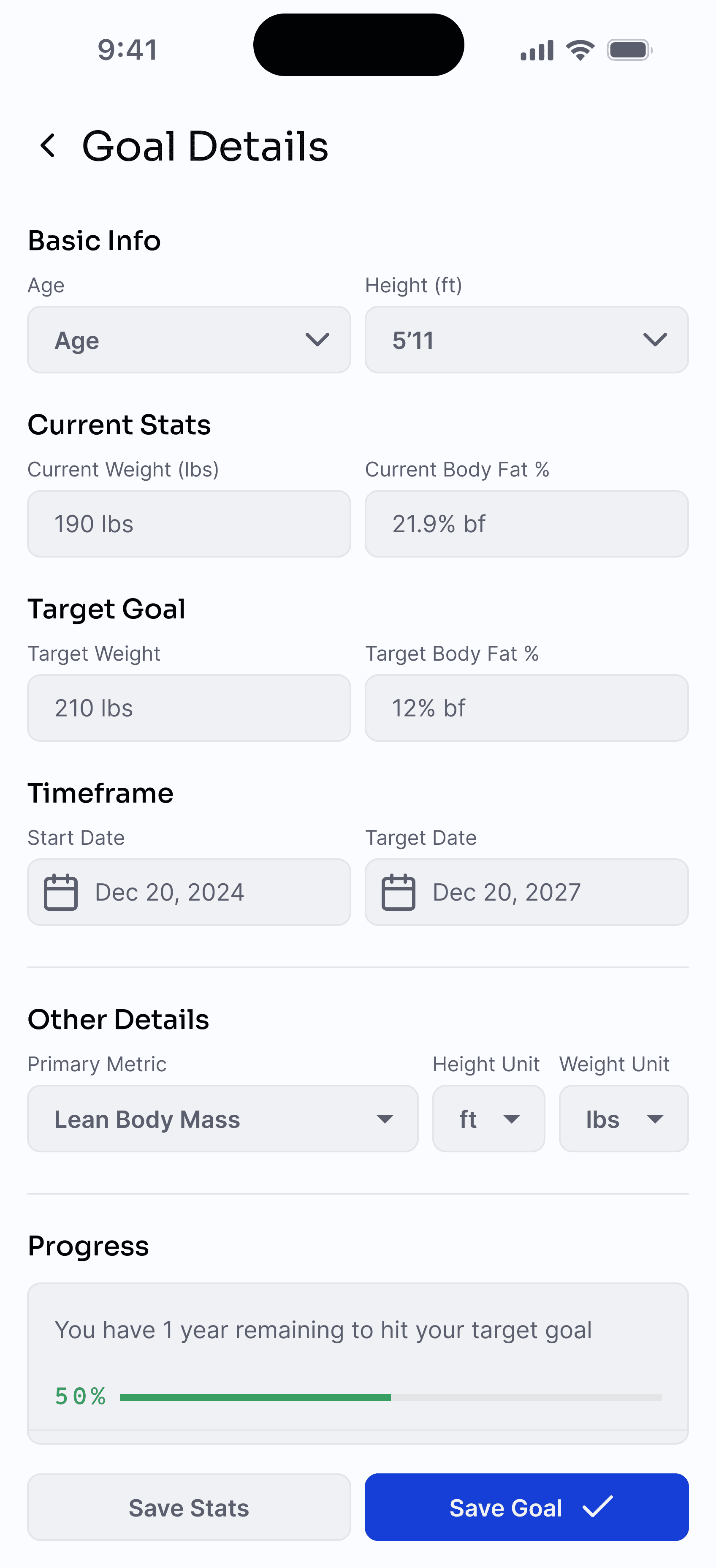
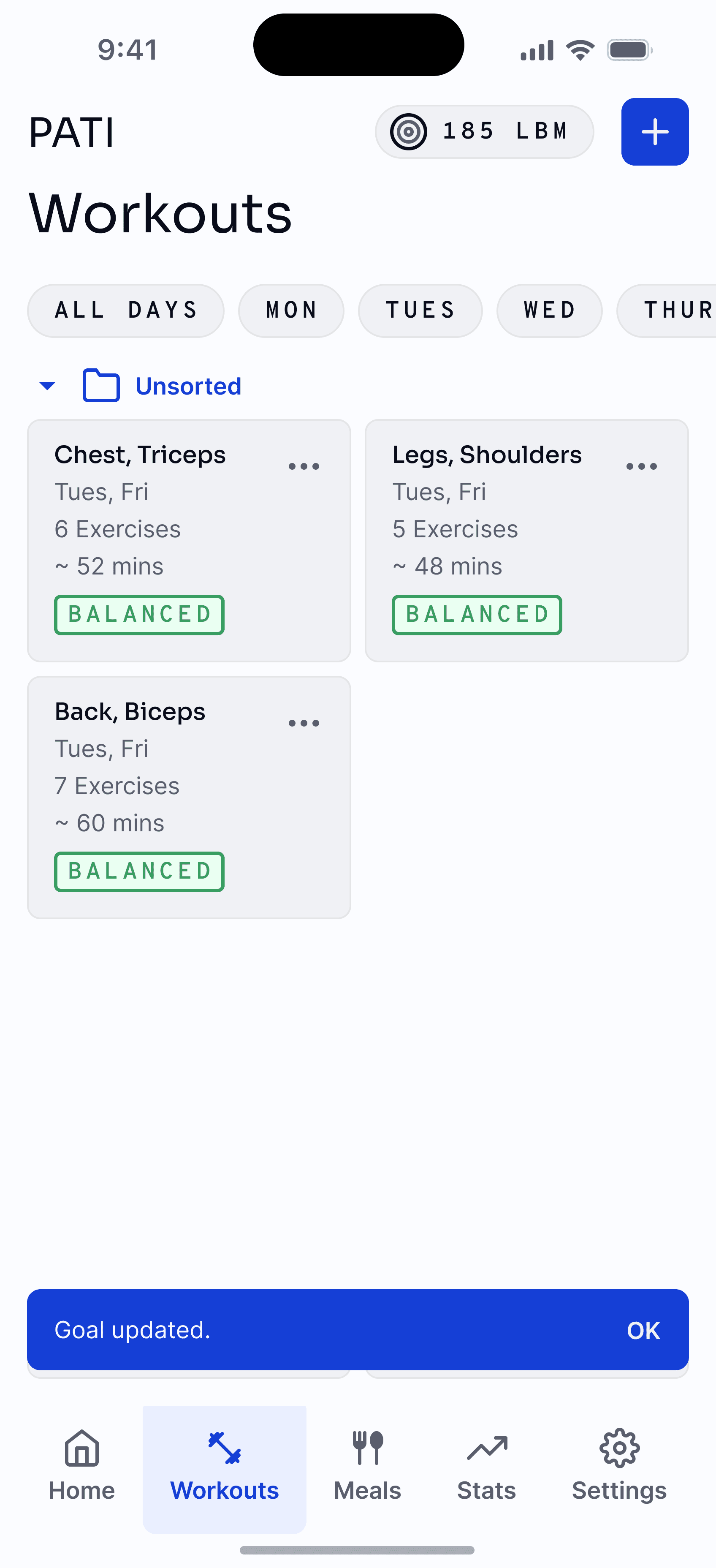
Users can access their goals from any screen via the “Goal Unset” chip in the top-right. From there, they can configure current and target stats then, save their changes and either stay on the Goal Details page or return to the previous tab.
user flow
workout-generation
deliver
I brought my prototype to users to gauge their interest. I received some feedback that led me designs eventually engineer an MVP in Cursor and reconsider the design.
Feedback
"I want to see other people's workouts, how can I do that?"
"What if you could customize the look of the app? We choose our colours that match with our outfits and equipment—why not the app? That'd be cool."
re-designs
hypothetical
Results
Assets